AI Tools Lead Scoring: How to Score Leads That Actually Convert in 2026

Looking for AI tools for lead scoring? Learn how to evaluate vendors, avoid common failures, and build a scoring system using the Fit-Context-Triggers framework.
Most AI tools for lead scoring fail for the same reason: they score what they can see, not what matters. Firmographics. Job titles. Page visits. These signals look useful until you realize they tell you nothing about whether a prospect will actually buy. At Pyra, we built LeadSeeker because we saw teams waste months chasing leads that looked perfect on paper but went nowhere.
This guide explains what separates effective AI tools for lead scoring from the noise. You will learn why most scoring systems fail, how to build one that works, and what to look for when evaluating vendors. Our sales automation solutions exist because we saw too many businesses deploy AI tools for lead scoring that generate numbers without generating revenue.
What Are AI Tools for Lead Scoring?
AI tools for lead scoring use machine learning to rank prospects by conversion likelihood. Instead of relying on manual point systems, these tools analyze patterns in your historical data to predict which leads will close and which will waste your time.
The goal is simple: focus your sales team on the leads most likely to convert. The AI evaluates signals across firmographics, behavior, and context to produce a score. High scores get immediate attention. Low scores enter nurture sequences or get deprioritized.
Why Most AI Tools for Lead Scoring Fail
Most AI tools for lead scoring fail because they optimize for the wrong inputs. Common problems include:
- Static data dependency. They rely on firmographics that do not change—company size, industry, location. These predict fit, not intent.
- Missing buying committee context. They score individual contacts, not the full decision-making unit.
- No trigger signals. They cannot detect real-world events—expansions, leadership changes, regulatory shifts—that indicate buying windows.
- Garbage in, garbage out. They score unverified contacts, leading to wasted outreach on bad data.
"The problem with most AI tools for lead scoring is they score leads, not opportunities. A lead with a high score but no buying trigger is just a database record. Real scoring requires context."
The Three Pillars of Effective AI Tools for Lead Scoring
Effective AI tools for lead scoring evaluate three dimensions: Fit, Context, and Triggers. Each pillar contributes to a complete picture of conversion likelihood.
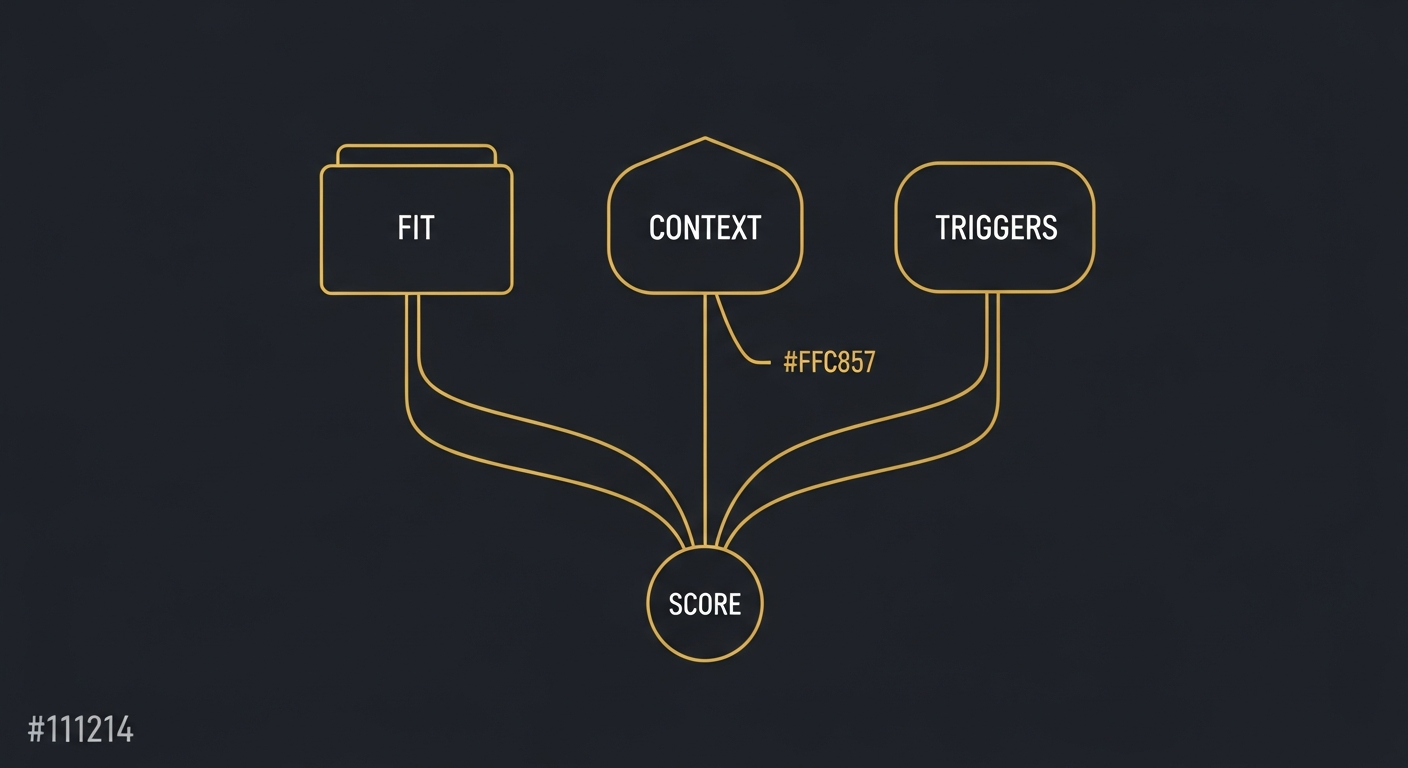
AI tools for lead scoring: Fit + Context + Triggers = Score
Pillar 1: Fit. Does this prospect match your ideal customer profile? Role, company size, industry, and geography. This is table stakes—every scoring tool does this.
Pillar 2: Context. Does this prospect have technical relevance? LeadSeeker analyzes patents, research papers, conference rosters, and specifications to identify stakeholders with genuine domain expertise. Generic databases miss this entirely.
Pillar 3: Triggers. Is there a real-world event creating urgency? Expansion announcements, ESG commitments, supply chain shifts, leadership changes. Triggers indicate buying windows—without them, you are guessing at timing.
How LeadSeeker Changes AI Tools for Lead Scoring
LeadSeeker is Pyra's AI-powered buyer-finding and verification system. Unlike traditional AI tools for lead scoring that score what is already in your CRM, LeadSeeker finds hidden decision-makers and delivers verified contact packages. According to McKinsey's research on B2B sales, companies that prioritize lead quality over volume see 30% higher conversion rates.
- Hidden buyer discovery. Parses patents, research, and conference rosters to find decision-makers who do not appear in standard databases.
- Buying committee mapping. Identifies all stakeholders involved in consensus decisions—R&D, Procurement, Ops, Sustainability.
- Verified contact packages. Delivers first name, last name, verified work email, direct phone, LinkedIn profile, and location context with 95%+ data accuracy.
- Scoring-ready inputs. Every contact comes with Fit, Context, and Trigger signals pre-attached.
The result: $1 per verified contact versus $8,000–$10,000/month for traditional platforms that deliver filler records.
How to Evaluate AI Tools for Lead Scoring
- Multi-signal scoring. Does it score beyond firmographics? Look for behavioral, contextual, and trigger-based signals.
- Buying committee awareness. Does it score individual contacts or entire opportunity groups?
- Data verification. Are scored contacts verified before outreach, or are you paying to chase bad data?
- CRM integration. Does it push scores directly into Salesforce, HubSpot, or your system of record?
- Explainability. Can you understand why a lead scored high or low?
Learn more about building complete lead generation systems in our guide on ChatGPT for lead generation.
Red Flags When Evaluating AI Tools for Lead Scoring
- "Works with any data." If the tool does not require clean, verified inputs, it will score garbage.
- "Instant setup." Effective scoring requires training on your historical data. Instant setup means generic models.
- "Unlimited leads." Volume means nothing. What matters is qualified lead volume.
- "AI does everything." The best AI tools for lead scoring augment human judgment, not replace it.
"If a vendor cannot explain exactly how their scoring model works, they are selling you a black box. You need to understand why leads score the way they do—otherwise you cannot improve the system."
Conclusion
Avoid vendors who promise magic from a simple integration. Effective AI tools for lead scoring require training on your historical data, integration with your tech stack, and ongoing optimization. The companies winning at lead scoring are those with systems that find hidden buyers, verify contacts, and prioritize based on real buying signals.
The question is not whether to use AI tools for lead scoring. It is whether to use ones that actually score what matters—or ones that just count page views.