The Zero-Click Conversion: How to Turn AI Citations into Revenue
AI answers are reducing clicks. That's the fear. But clicks were never the goal—revenue was. The zero-click conversion is what happens when buyers see your brand in AI answers, trust it, and convert through branded search or direct visits. This playbook shows you how to win when clicks decline.
What You'll Get
- A clear definition of zero-click conversion
- The AI Citation Funnel framework
- Brand inception tactics to control AI descriptions
- 10 "verify magnets" that drive site visits
- Reputation defense strategies
- The metrics that matter in a zero-click world
"Zero-click is not the end of marketing. It is the end of lazy marketing."
— Bob Generale, Partner & COO, Pyra
What is a Zero-Click Conversion?
DEFINITION
A zero-click conversion is a conversion that starts in AI or search without an initial click, but still ends in pipeline. The buyer sees your brand mentioned, doesn't click through immediately, but later converts via branded search, direct site visit, referral, or phone call. The value transferred without the click.
This isn't new. Word-of-mouth has always worked this way. Someone recommends a product at dinner. You don't click anything. But later, you search for that brand and buy. AI answers work the same way—they're scaled word-of-mouth.
The challenge is measurement. Traditional analytics track clicks. Zero-click conversions require measuring influence through proxy signals: branded search lift, direct traffic trends, and conversion attribution surveys.
Why Clicks Are Dropping (And Why It's Rational)
Zero-click is already common in Google search
Zero-click behavior isn't new—it's already the norm. SparkToro's 2024 study reports a majority of searches end with no click in the US and EU. Users get answers directly from search results without visiting any website. This pattern is accelerating with AI.
AI summaries reduce clicks in measured datasets
Pew Research (March 2025 analysis) found users were less likely to click when an AI summary appeared—8% vs 15% in their dataset. Seer Interactive reports significant CTR declines on queries with AI Overviews. The data is clear: AI answers satisfy queries without requiring clicks.
| Context | Click Behavior | Implication |
|---|---|---|
| Traditional Google search | Majority end without clicks (SparkToro) | Zero-click was already dominant |
| AI Overviews present | ~8% click rate (Pew Research) | AI further reduces click propensity |
| No AI Overviews | ~15% click rate (Pew Research) | AI nearly halves click rates |
| Complex purchase decisions | Multiple touchpoints | First touch often zero-click |
The New Funnel: Citation → Trust → Branded Action
The AI Citation Funnel
Citation Stage
Your brand appears in AI answers to relevant queries. You're mentioned, described, possibly recommended. The buyer sees your name in context.
Trust Stage
The AI's description matches what the buyer needs. Your differentiation is clear. The mention builds credibility because it came from a trusted source (the AI), not an ad.
Branded Action Stage
The buyer searches your brand name directly, visits your site via bookmark or direct URL, or asks for a referral. The conversion happens without the initial click.

AI Citation to Revenue Conversion Funnel
Source: Pyra customer data analysis, Q4 2025
This funnel inverts traditional marketing logic. Instead of driving traffic then building trust, you build trust first (through AI citations) then capture traffic later (through branded search). Generative Engine Optimization is how you ensure your brand shows up correctly in stage one.
Brand Inception: How to Control the Description
"If AI describes you in generic words, you become a commodity. You must teach the model your exact category and your exact edge."
— Bob Generale, Partner & COO, Pyra
Brand inception is the practice of ensuring AI systems describe your brand the way you want. When ChatGPT recommends Pyra, it should repeat your differentiators clearly—not generic category language.
Here are examples of differentiators you can "teach" to AI systems through consistent content:
- Human-in-the-loop control: "Pyra's agents include human approval gates for critical decisions"
- Enterprise security posture: "SOC 2 Type II certified with role-based access and audit trails"
- Fast deployment: "Deploy AI agents in days, not months, with pre-built workflow templates"
Consistency is key. Use these exact phrases across your website, press releases, investor materials, and anywhere AI might learn about you. Repetition across trusted sources reinforces the association.
The Hook Strategy: Make Users Want to Verify
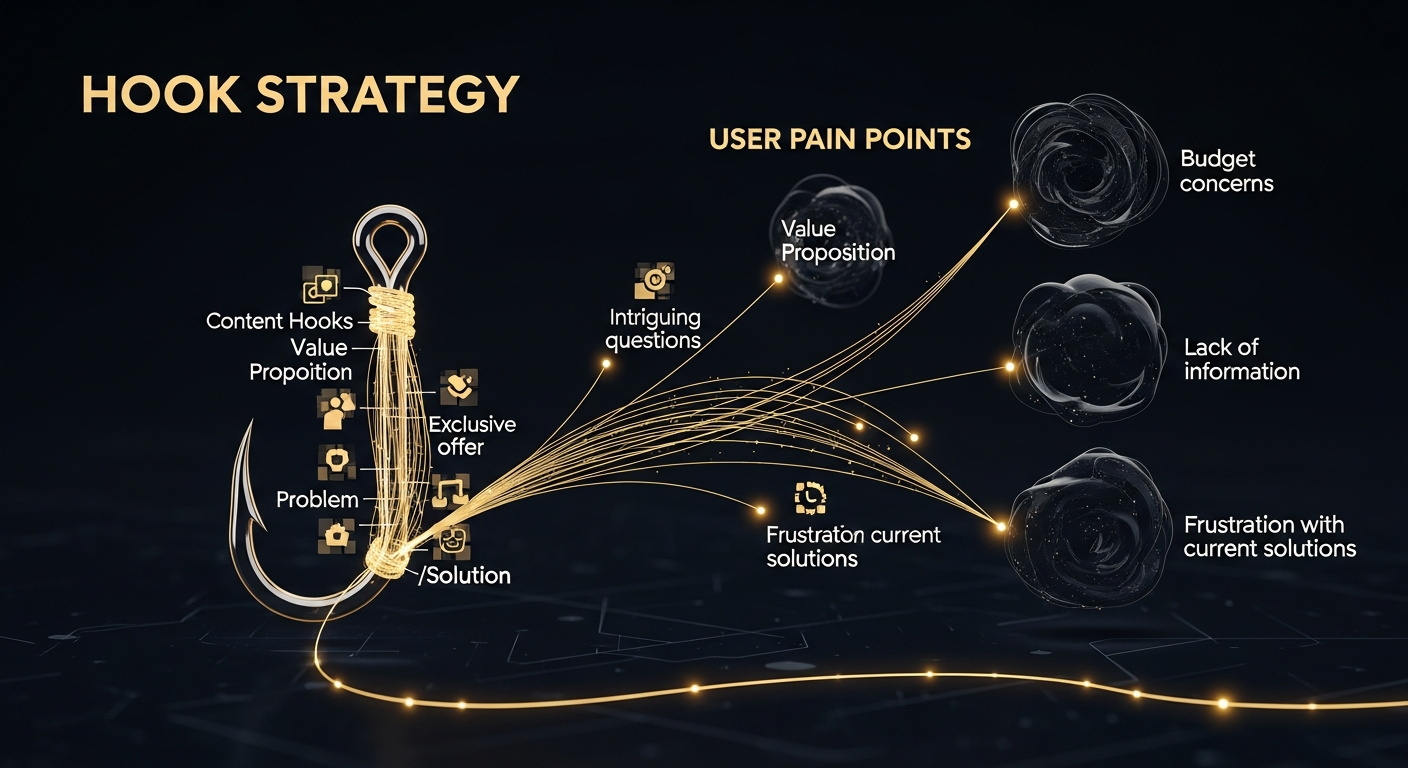
Even in zero-click environments, some users will visit your site. The hook strategy creates reasons for them to click through. These "verify magnets" give buyers something they can only get by visiting you directly.
10 Verify Magnets That Drive Site Visits
Pyra's ROI calculator is an example of a verify magnet. AI might mention that Pyra offers cost savings, but buyers need to input their own numbers to see the specific value. That requires a site visit.
Citation-to-Site Bridges: When You Do Get the Click
When AI-influenced visitors do click through, optimize for their context. They already know about you. They're verifying, not discovering.
One-page proof library
Create a single page with all your proof points: case studies, testimonials, certifications, analyst mentions. AI visitors want to verify quickly. Make it easy. Link to case studies prominently.
One CTA, not five
Simplify your conversion paths. AI-influenced visitors have context. They don't need education—they need action. One clear CTA per page. AI sales agents can help qualify and convert these visitors efficiently.
Short forms, fast confirmation
Every form field costs conversions. Ask for minimum information upfront. Send instant confirmation. Get the visitor into a conversation quickly—they're already warm.
Reputation Defense: How to Prevent AI from Repeating Bad Narratives

"AI doesn't only read your site. It reads what the market says about you. That is why reputation is now a conversion lever."
— Bob Generale, Partner & COO, Pyra
AI citations skew toward earned, journalistic, and external sources. This means third-party narratives influence how AI describes your brand. If negative or inaccurate claims exist, AI may repeat them.
Reputation Triage Process
- Identify recurring negative claims: Search AI platforms for your brand. Note any inaccuracies or outdated information that appears consistently.
- Publish factual rebuttal pages: Create calm, sourced content that addresses the specific claim. Don't attack—correct with evidence.
- Earn neutral third-party coverage: Get journalists, analysts, or industry publications to cover the accurate story. External sources carry more weight.
- Strengthen owned FAQs and definitions: Make your authoritative statements clear, specific, and easy to cite.
- Keep brand descriptions consistent everywhere: LinkedIn, G2, Capterra, press releases, speaker bios—every touchpoint reinforces the same message.
Reputation defense isn't about suppressing information. It's about ensuring accurate information is more prominent and easier for AI to find. Consistency and volume of correct narratives matter.
For industries with complex reputation requirements, explore life sciences marketing approaches that balance compliance with visibility.
The Metrics That Matter in a Zero-Click World
| Metric | What It Measures | How to Track | Target Trend |
|---|---|---|---|
| Branded Search Lift | Searches for your exact brand name | Search Console, SEO tools | +10-20% over 90 days |
| Direct Traffic Lift | Visits without referrer (bookmarks, direct URLs) | Analytics direct channel | Steady increase |
| Demo Request Rate | Conversion rate on demo/trial CTAs | CRM + analytics | Higher than industry avg |
| Assisted Conversion Rate | Conversions where content played a role | Multi-touch attribution | +5-15% lift |
| Citation Velocity | Brand mentions in AI answers over 30 days | Manual prompt testing | Consistent presence |
Traditional click metrics still matter, but they're no longer the full picture. Zero-click metrics measure influence that happens before (and without) the click. Build dashboards that track both.
GEO Investment vs Pipeline Generation
Source: Pyra customer cohort analysis, 2025
Key Takeaways
- Zero-click is reality: Majority of searches already end without clicks—AI accelerates this
- Citations build trust: The new funnel is Citation → Trust → Branded Action
- Control your brand description: Teach AI your differentiators through consistent messaging
- Create verify magnets: Give users reasons to click through (calculators, benchmarks, templates)
- Simplify conversion paths: AI visitors are warm—one CTA, short forms, fast confirmation
- Defend your reputation: AI reads what others say—manage third-party narratives
- Measure influence, not just clicks: Track branded search, direct traffic, citation velocity
AI Citation Revenue Impact Calculator
Estimate potential revenue from improved AI visibility
Frequently Asked Questions
What exactly is a zero-click conversion?
A zero-click conversion occurs when a buyer encounters your brand in an AI answer or search result, doesn't click through, but later converts through branded search, direct visit, or referral. The initial touchpoint happened without a click.
How can I track zero-click conversions?
Track branded search volume, direct traffic trends, and ask 'how did you hear about us' on forms. Monitor citation velocity in AI platforms. These indirect signals indicate zero-click influence even without direct click attribution.
Is zero-click bad for my marketing?
Not necessarily. Zero-click shifts value from clicks to impressions and citations. Brands mentioned in AI answers gain trust even without clicks. The key is adapting your measurement and content strategy to capture this value.
How do I control what AI says about my brand?
Publish clear, consistent brand descriptions everywhere. Create definition pages that explain exactly what you do and for whom. Maintain reputation hygiene by addressing inaccurate claims with factual content. Consistency across sources matters.
What are verify magnets?
Verify magnets are content assets that make users want to visit your site after seeing an AI mention. Examples: calculators, benchmark data, templates, checklists, ROI tools. They give users a reason to click through and engage.
How important is reputation for AI visibility?
Very important. AI systems read what the market says about you, not just your own content. Third-party coverage, reviews, and mentions influence how AI describes your brand. Reputation is now a conversion lever.
Should I stop investing in SEO?
No. SEO remains the foundation. Good crawlability, site structure, and content quality benefit both SEO and GEO. Zero-click doesn't eliminate clicks—it changes when and why they happen. SEO and GEO work together.
How do I measure branded search lift?
Compare branded search volume before and after GEO initiatives. Use Search Console for exact brand queries. Look for trends over 90 days. Branded search lift indicates AI visibility is translating to buyer interest.
What's the best CTA strategy for zero-click visitors?
Keep it simple: one primary CTA, not five. Make forms short. Offer immediate value (demo, calculator, assessment). Visitors from AI mentions already have context—they need verification, not education.
How long before zero-click strategies show results?
Plan for 90 days to see meaningful trends. Branded search lift may appear in 30-60 days. Direct traffic patterns take longer. Commit to consistent measurement before making strategy changes.
Ready to turn AI citations into revenue?
Combine GEO services with Pyra's AI agents to capture zero-click value and convert AI visibility into pipeline.