AI Agent Who Can Attend My Meeting: How to Stay in the Room When You're Not
Yes, an AI agent can attend your meeting for you. But the real question isn't whether it can—it's whether you'll still be in control when it does.
Looking for an AI Agent Who Can Attend My Meeting? The technology exists. But here's the thing nobody talks about: finding an AI Agent Who Can Attend My Meeting is easy. Staying in control when you're not in the room—that's the real challenge. At Pyra, we built AI Agent Thor specifically because most meeting AI fails the control test completely.
This guide explains how an AI agent who can attend your meeting actually works, what separates useful AI meeting agents from glorified tape recorders, and how to maintain control even when you're nowhere near the call. Our operations automation solutions exist because we watched too many executives get summaries that told them nothing useful.
What Makes an AI Agent Who Can Attend My Meeting Different?
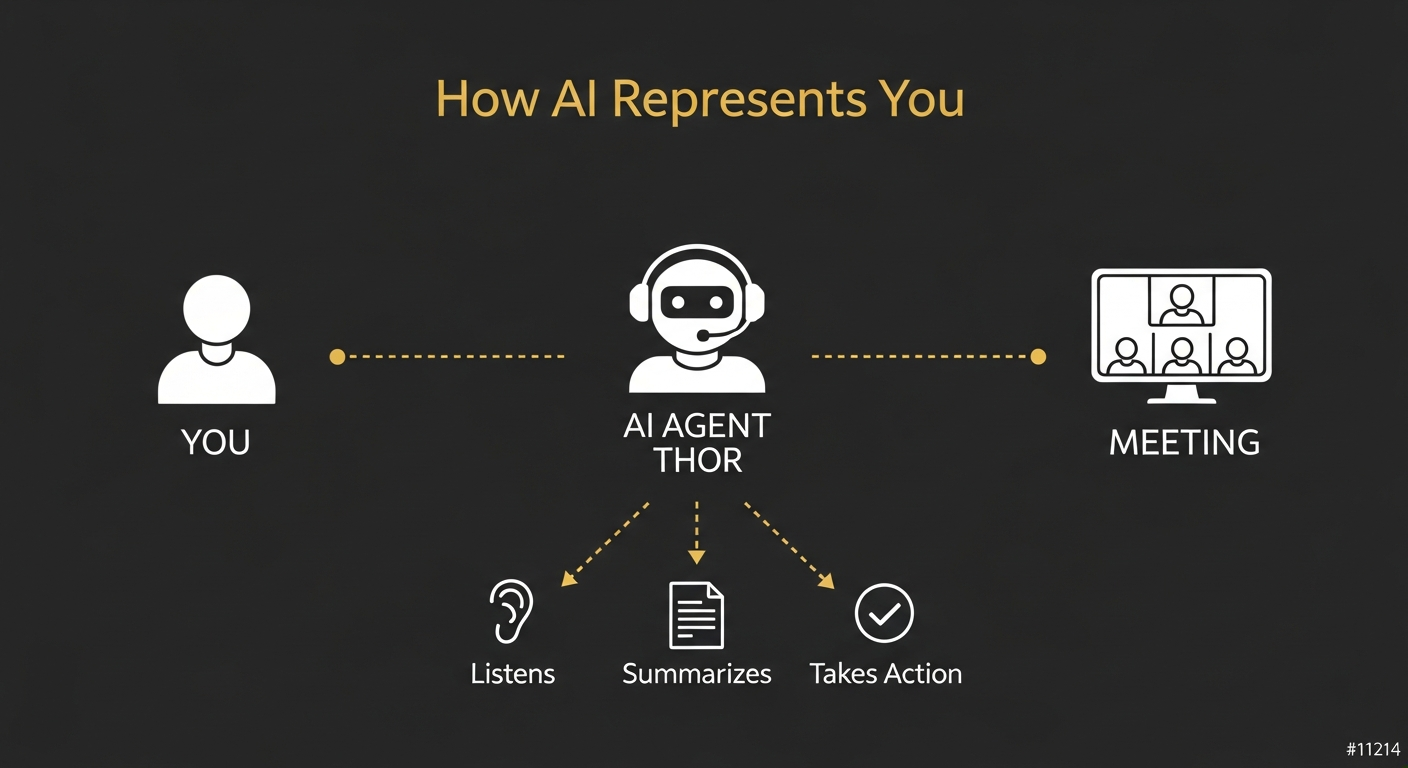
An AI agent who can attend your meeting isn't just recording software with extra steps. True meeting agents do three things simultaneously: they listen actively, summarize intelligently, and take action automatically. Think of the difference between a court stenographer and an executive assistant. One records everything. The other knows what matters and does something about it.
The core capability that separates an AI agent who can attend your meeting from basic transcription is reasoning. Basic tools create transcripts. AI agents identify commitments, extract decisions, recognize questions directed at absent participants, and flag items requiring human attention.
How Thor Represents You
At Pyra, we built AI Agent Thor as the meeting note-taker, summarizer, and action-taker that works like an account manager or EA. Thor doesn't just sit in the meeting and transcribe—it listens with purpose, understands context, and creates outputs you can actually use.
- Active Listening: Thor identifies speakers, tracks topic changes, and recognizes when commitments are being made or questions need answers.
- Intelligent Summarization: Instead of "here's what everyone said," Thor produces "here's what you need to know and what needs to happen next."
- Automatic Action: Thor can create tasks, send follow-ups, update your CRM, or flag items for immediate attention—all without manual intervention.
"The difference between passive meeting AI and Thor is simple: one gives you a transcript you'll never read, the other gives you outcomes you can act on."— Bob Generale, COO at Pyra
Why Most AI Meeting Agent Tools Fail
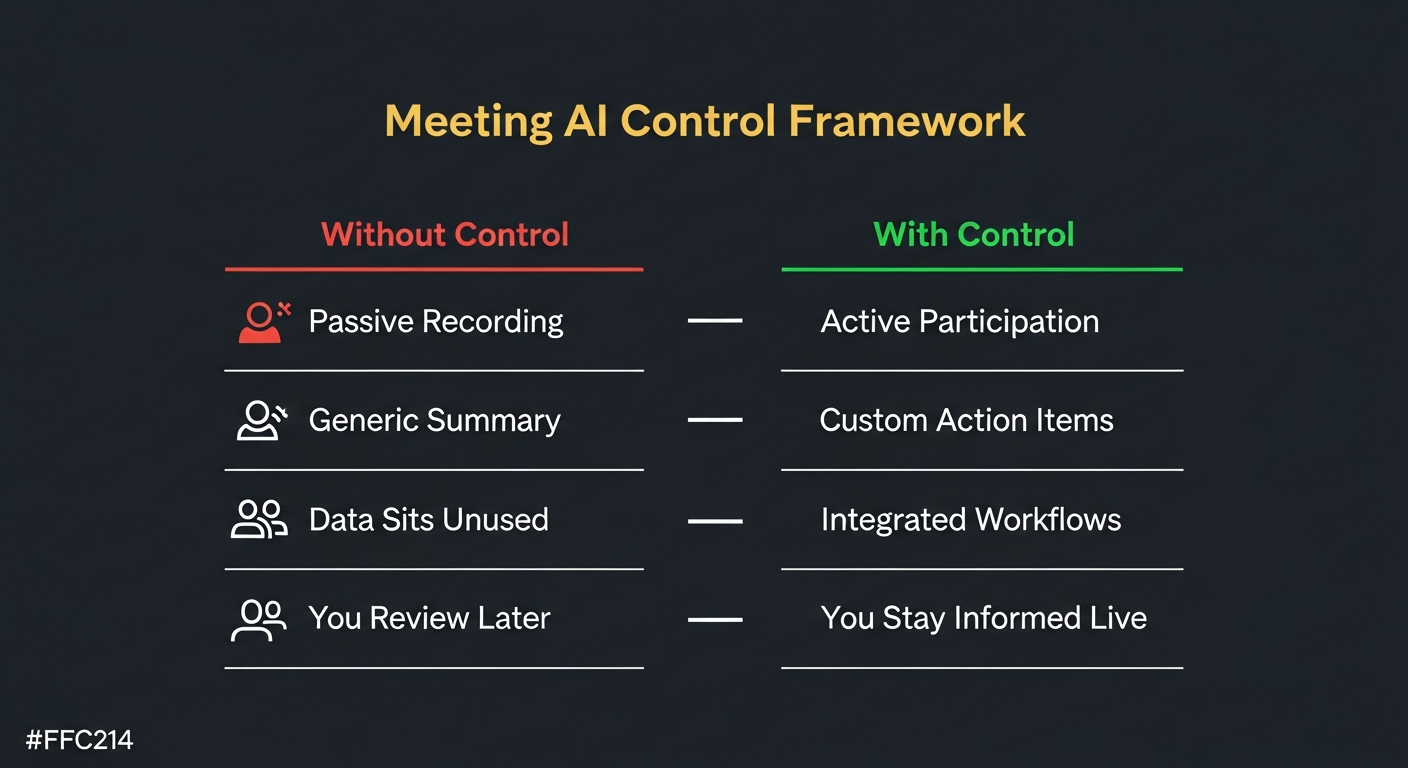
Here's the problem with most tools marketed as an AI agent who can attend your meeting: they're designed for documentation, not delegation. They produce long transcripts, generic summaries, and maybe a bullet list of action items. Then you're supposed to read through everything, extract what matters, and do the follow-up yourself. That's not attending the meeting for you—that's just creating more homework.
This connects directly to Pyra's Zero-Touch Operations™ philosophy: AI should execute complete workflows with human approval gates, not create more work for humans to complete.
Control Framework
- Decision Authority: Define what the AI can decide versus what requires your explicit approval.
- Escalation Triggers: Set clear flags for when you need to be notified immediately versus in the daily summary.
- Context Boundaries: Specify which topics the AI should capture in detail versus which should remain at headline level.
- Action Limits: Define what automatic actions the AI can take. Create tasks? Yes. Send emails on your behalf? Only with templates you've pre-approved.
"Control isn't about limiting what AI can do—it's about ensuring AI does exactly what you would do if you had infinite time. Thor doesn't replace your judgment. It extends your presence."— Bob Generale, COO at Pyra
Evaluation Criteria
- Integration Depth: Does it connect to your calendar, CRM, and task management?
- Customizable Priorities: Can you define what matters to you specifically?
- Action Capabilities: Beyond summarizing, what can it do? Create tasks? Send follow-ups? Update records?
- Privacy Controls: Where does your meeting data go? At Pyra, our client-instanced architecture means your data never leaves your isolated environment.
- Learning Capability: Does it get better over time?
Getting Started
- Start with Low-Stakes Meetings: Internal status updates, recurring standups, information-sharing sessions. Not client negotiations or board meetings.
- Define Your Escalation Rules First: Before turning on any AI, know exactly what should trigger your immediate attention.
- Review Outputs Actively at First: Treat it like onboarding a new hire. Check its work. Give feedback. Adjust the configuration.
- Expand Gradually: Add more meeting types as you gain confidence in the system's judgment.
According to Harvard Business Review research, executives spend an average of 23 hours per week in meetings. An AI agent who can attend your meeting gives you back the hours spent in meetings where your presence was obligatory rather than essential.
Conclusion
AI Agent Thor answers this by maintaining what we call "extended presence." Your priorities guide every interaction. Your escalation rules determine what reaches you and when. Your action templates define what happens automatically. You're not absent from the meeting—you're present through a carefully configured extension of your attention and authority.